REBUILD
PLANNING &
EXAMPLES
A symptom alone does not tell you whether an engine needs rebuilding. Start with diagnostics, then review the findings and proposed scope before approving work.
Educational examples—not documented customer jobs.
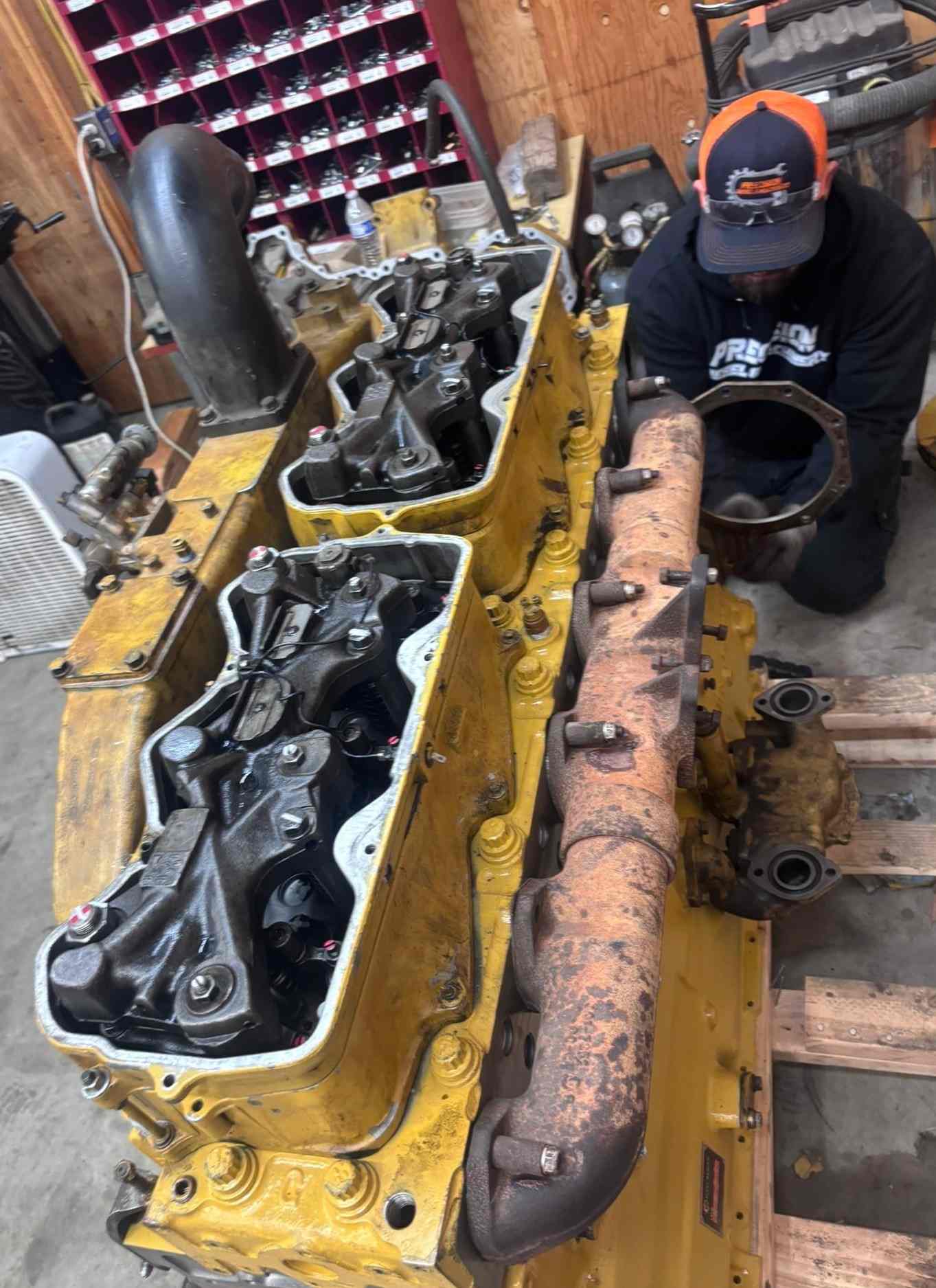
Use these examples to plan the next step for your equipment. They are not completed repairs or promised results, and the shop photo is not attributed to any example.
BEFORE YOU APPROVE A REBUILD
Use these hypothetical situations to prepare a useful service request. They do not establish a diagnosis, repair price, turnaround time, or outcome for your equipment.
EDUCATIONAL SCENARIO
A FLEET TRUCK USING MORE OIL
WHAT TO RECORD
If a truck needs more frequent oil top-ups, record the amount added and the mileage between top-ups. Note when the change began and whether it happens under load.
WHAT TO BRING
Bring maintenance records, any fault codes, and the operator's description. Separate recorded quantities from estimates so the technician can assess the pattern.
WHAT TO DISCUSS
Ask what findings support a targeted repair, an in-frame rebuild, or engine removal. Oil consumption alone does not establish the cause or the required scope.
EDUCATIONAL SCENARIO
A JOB-SITE MACHINE LOSING POWER
WHAT TO RECORD
If construction equipment loses power, describe which task it was performing and whether the change occurs at idle, during travel, or while operating an attachment.
WHAT TO BRING
Share the machine and engine identification, recorded engine hours, warning messages, service history, and site access details if the unit cannot be brought in.
WHAT TO DISCUSS
Start with an assessment rather than assuming the engine needs rebuilding. Discuss whether mobile diagnostics or shop evaluation is appropriate for the equipment and location.
EDUCATIONAL SCENARIO
EQUIPMENT OVERHEATING OR LOSING COOLANT
WHAT TO RECORD
If temperature warnings or coolant loss occur, report what the operator observed, the operating conditions, and any recent cooling-system work. Do not treat a symptom as a confirmed diagnosis.
WHAT TO BRING
Provide the warning history, fluid top-up records, and any existing inspection results. Call to discuss safe assessment and transport rather than continuing work to reproduce a fault.
WHAT TO DISCUSS
Ask which findings are confirmed and which need further inspection. The repair recommendation and rebuild scope should follow the evidence, not a generic example.
WHAT A DOCUMENTED CASE STUDY SHOULD SHOW
A useful rebuild case study connects the reported problem to recorded findings, the approved work, and supported results. These are the details to look for when evaluating a project—not claims about jobs shown on this page.
ENGINE & APPLICATION
The verified engine model and equipment application, recorded mileage or hours, and the reported concern. Customer identity should be shared only with permission.
DIAGNOSTIC EVIDENCE
Recorded findings and test conditions, with measurements interpreted against the applicable engine specifications. A reported symptom is not the same as a confirmed cause.
APPROVED REPAIR SCOPE
What was repaired, replaced, or reused, and why. Identify machining performed in-house versus by a partner, rather than assuming all work happened in one shop.
JOB PHOTOS WITH CONTEXT
Photos tied to the actual job and stage of work, with customer permission and sensitive identifiers removed. A shop photo alone does not prove a repair scope or result.
TESTING & HANDOVER
What was checked after the work and what the results showed. Any completion dates, elapsed time, price, or warranty terms must come from that job's records.
SUPPORTED FOLLOW-UP
Distinguish a customer's reported experience from measured results. Fuel-economy, oil-use, and service-life claims need a documented comparison and follow-up period.
WHAT TO SEND FOR YOUR OWN JOB
Include the equipment make and model, engine identification if known, unit number, mileage or hours, symptoms, fault codes, and recent maintenance. Tell us where the equipment is, whether it can be moved, and any operating deadline. Unknown details can be confirmed during assessment.
For a fleet, identify the person who can approve the diagnostic and repair scope. Keep invoices, VINs, and customer details out of public posts. Use our existing estimate request for your equipment information or call to discuss the next step.
Explore diesel engine rebuilding, review the rebuild pricing guide, or discuss fleet and contractor services.
DISCUSS YOUR EQUIPMENT
Bring the symptoms and records you have. Discuss diagnostics and the repair options before committing to an engine rebuild.