
DOT MAINTENANCE COMPLIANCE SERVICE
FOR FMCSA-REGULATED CARRIERS
YOU RUN THE TRUCKS.WE KEEP THEM DOT-READY.
Because you deserve to be treated better.
A is any truck, or truck plus trailer, used for business and rated 10,001 lbs or more. Run even one, and FMCSA and the WSP hold you to the same maintenance and recordkeeping rules as a 500-truck fleet. Our DOT Maintenance Compliance Service makes Precision Diesel your maintenance department and records keeper: annual DOT inspections, DVIR repairs, roadside fixes, photos, and a complete file for every covered unit.
5.0 Star Rating on Google (34 reviews and counting)10% OFF ALL SERVICESON EVERY PM-COVERED UNIT
Every service on a covered truck is 10% off: PMs, DOT inspections, DVIR and roadside repairs, diagnostics, in-shop repairs, and engine rebuilds.
START HERE. MOST SMALL OPERATORS GUESS WRONG.
DOES THIS APPLY TO YOU?
If you decide the DOT rules don't apply, nothing else here matters. The most common mistake: not counting the trailer.
1USED FOR BUSINESS?
Hauling your own tools, equipment, or materials to your own jobs counts. It doesn't have to be for hire.
2RATED 10,001 LBS OR MORE?
The truck alone, or the truck plus its trailer. The rating or the actual weight, whichever is greater.
=IT'S A CMV. PART 396 APPLIES.
To the truck and every trailer in the combination, whether you run interstate or Washington-only.
49 CFR §390.5 · RCW 46.32.005 · WAC 446-65-010(1)(v). Also a CMV at any weight: placarded hazmat, or 9+ passengers for pay (16+ not for pay).
COUNT THE TRAILER
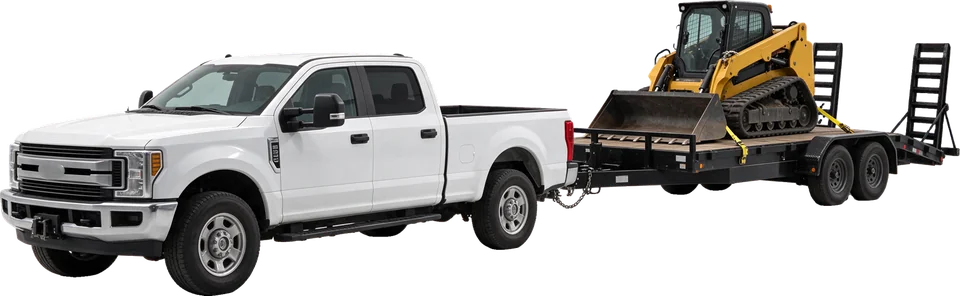
is one vehicle's maximum loaded rating. It's on the truck's door-jamb label and the trailer's VIN plate. is the combination: the manufacturer's combination rating or truck GVWR plus trailer GVWR, whichever is greater. It's the rating, not the load. An empty trailer rated 7,000 lbs still adds 7,000 lbs to the combined weight.
Enter a truck rating or tap an example to see the result.
This check is a guide based on 49 CFR §390.5. We confirm every unit's ratings at the first visit.
IS EVERY TRAILER A CMV?
Gooseneck, lowboy, dump, or equipment trailer: always a CMV on its own, no matter what pulls it. [§390.5]
A CMV whenever it's hitched in that combination. Each vehicle in a combination needs its own annual inspection [§396.17(a)] and its own DVIR [§396.11(a)(2)].
Not a CMV in that use. Hitch it to a bigger truck and it becomes one.
If a trailer could ever be hitched to a CMV, maintain it as one: annual inspection, decal, and its own file. An uninspected trailer counts in an audit just like a truck.
THE REQUIREMENTS
WHAT EVERY CMV NEEDS: SCHEDULE, FREQUENCY & PAPERWORK
| Requirement | How often | Truck | Trailer | Paperwork you must have | Keep it | We handle it |
|---|---|---|---|---|---|---|
| On a schedule you set; OEM intervals are the usual baseline. Safe parts, no oil or grease leaks, at all times. | ● | ● | Vehicle ID: unit #, make, VIN, year, owner if leased. A schedule showing what is due and when. A record of every inspection, repair, and PM with its date and nature [§396.3(b)]. | 1 yr, +6 mo after it leaves you | ✓ | |
| End of each day's work, when a defect is found or reported. | ● | ● its own report | One signed report for each vehicle operated, covering brakes and trailer brake connections, coupling, lights, tires, wheels, and more. Not required if you run only one CMV [§396.11(a)(5)]. | 3 months | ✓ repairs + certification | |
| Before the vehicle runs again, for every defect listed. | ● | ● | Signed certification that each defect was repaired or that repair is unnecessary, on or attached to the DVIR. | 3 months | ✓ | |
| Before the next trip after a DVIR. | ● | ● while hitched | Driver signs the DVIR, acknowledging the review and the repair certification. | 3 months | Your driver | |
| At least every 12 months, to Part 396 Appendix A standards. | ● | ● each trailer & dolly | Inspection report naming the inspector, carrier, date, and vehicle, with each component and result. Report or decal carried on the vehicle. | Report 14 months | ✓ | |
| Within 15 days of the roadside inspection. | ● | ● | Each violation corrected and certified by a company official. Keep a copy. | 12 months | ✓ we prepare, you sign | |
| For anyone doing annuals or brake work. | ● | ● | Evidence of each inspector's training or experience on file. | While employed, +1 yr | ✓ |
Systematic inspection, repair, maintenance & lubrication
- Cite
- How often
- On a schedule you set; OEM intervals are the usual baseline. Safe parts, no oil or grease leaks, at all times.
- Truck / Trailer
- ● / ●
- Paperwork you must have
- Vehicle ID: unit #, make, VIN, year, owner if leased. A schedule showing what is due and when. A record of every inspection, repair, and PM with its date and nature [§396.3(b)].
- Keep it
- 1 yr, +6 mo after it leaves you
- We handle it
- ✓
Driver vehicle inspection report (DVIR)
- Cite
- How often
- End of each day's work, when a defect is found or reported.
- Truck / Trailer
- ● / ● its own report
- Paperwork you must have
- One signed report for each vehicle operated, covering brakes and trailer brake connections, coupling, lights, tires, wheels, and more. Not required if you run only one CMV [§396.11(a)(5)].
- Keep it
- 3 months
- We handle it
- ✓ repairs + certification
Repair certification
- Cite
- How often
- Before the vehicle runs again, for every defect listed.
- Truck / Trailer
- ● / ●
- Paperwork you must have
- Signed certification that each defect was repaired or that repair is unnecessary, on or attached to the DVIR.
- Keep it
- 3 months
- We handle it
- ✓
Driver review before driving
- Cite
- How often
- Before the next trip after a DVIR.
- Truck / Trailer
- ● / ● while hitched
- Paperwork you must have
- Driver signs the DVIR, acknowledging the review and the repair certification.
- Keep it
- 3 months
- We handle it
- Your driver
Annual (periodic) inspection
- Cite
- How often
- At least every 12 months, to Part 396 Appendix A standards.
- Truck / Trailer
- ● / ● each trailer & dolly
- Paperwork you must have
- Inspection report naming the inspector, carrier, date, and vehicle, with each component and result. Report or decal carried on the vehicle.
- Keep it
- Report 14 months
- We handle it
- ✓
Roadside inspection corrections
- Cite
- How often
- Within 15 days of the roadside inspection.
- Truck / Trailer
- ● / ●
- Paperwork you must have
- Each violation corrected and certified by a company official. Keep a copy.
- Keep it
- 12 months
- We handle it
- ✓ we prepare, you sign
Inspector & brake-inspector qualifications
- Cite
- How often
- For anyone doing annuals or brake work.
- Truck / Trailer
- ● / ●
- Paperwork you must have
- Evidence of each inspector's training or experience on file.
- Keep it
- While employed, +1 yr
- We handle it
- ✓
WHAT HAPPENS WHEN MAINTENANCE RULES ARE MISSED
WHAT'S AT STAKE IF IT'S MISSED
Maintenance gaps get caught in three places. Each one costs money, and the last two can park every truck you own.
A serious defect parks the truck on the spot until it is repaired [§396.9(c)(2)]. Other violations must be fixed and certified within 15 days [§396.9(d)(2)]. Every inspection goes on your record. A vehicle OOS rate of 34%+ (3 or more inspections in 12 months) starts a review at Conditional [Part 385, App. B].
Within your first 12 months. One OOS truck run before repair, one unfixed OOS defect from a DVIR, or no annual inspection on 51%+ of vehicles checked fails the audit [§385.321(b)]. No corrective action in time: registration revoked and OOS on day 61 [§385.325(b)].
FMCSA or the WSP pulls your file, DVIRs, and inspection reports, with no advance notice required in WA [RCW 46.32.080]. A final Unsatisfactory rating bars CMV operation from day 61 [§385.13(a)]. Missing records, DVIRs, or annuals are "critical" violations; running a truck with an OOS or DVIR defect is "acute." A WA OOS order also triggers a federal one [§385.13(d)(2)].
Complete records are the cheapest insurance against a recordkeeping fine.
Protect my trucksYOU DRIVE. WE DOCUMENT.
We do the maintenance FMCSA requires and produce the records that prove it, every time the wrench turns.
Call or text (509) 406-1081 and text a photo of the DVIR sheet.
Routed to the next available tech not on a priority call, 24/7.
Fixed at our shop or in the field. Photographed, parts and labor logged.
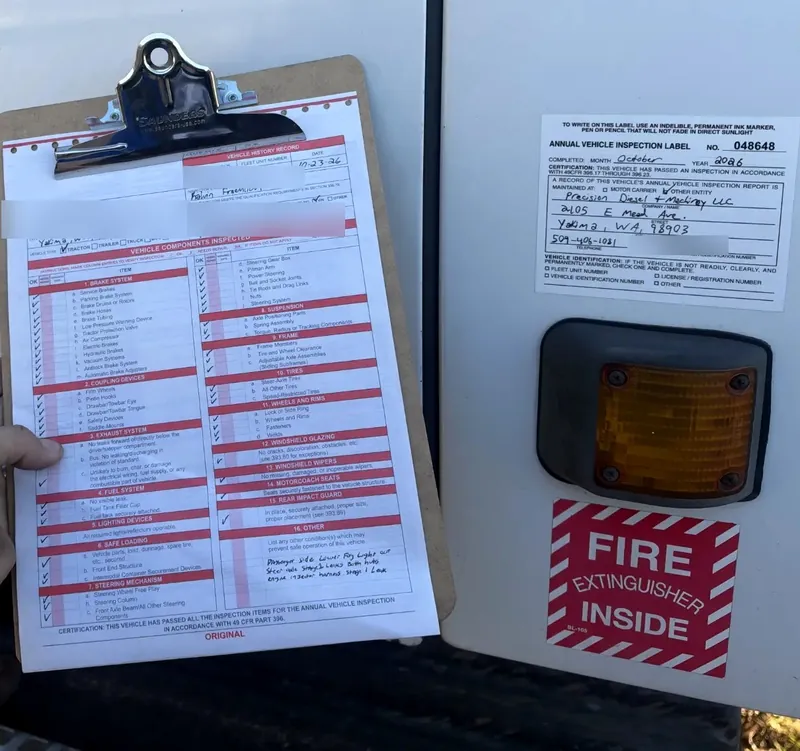
Tech signs the repair certification, attaches it to the DVIR, and scans it to Fullbay [§396.11(a)(3)].
YOUR ONLY JOBS
- Driver writes up defects on the DVIR; you text us a photo
- Driver reviews and signs the DVIR before driving [§396.13]
- Keep the annual report or decal on each vehicle
- Sign roadside corrections within 15 days
- Make the truck available. We come to you.
WE KEEP YOUR TRUCK FILE
- Unit, make, VIN, year, owner if leased
- PM schedule and next-due dates
- Annual inspection reports and decals
- DVIRs with signed repair certifications
- Roadside reports and corrections
- Repair orders, parts, and photos
- Inspector and brake tech qualifications
WHAT THIS PARTNERSHIP BRINGS YOU
YOUR SERVICE AT A GLANCE
10% OFF ALL SERVICES
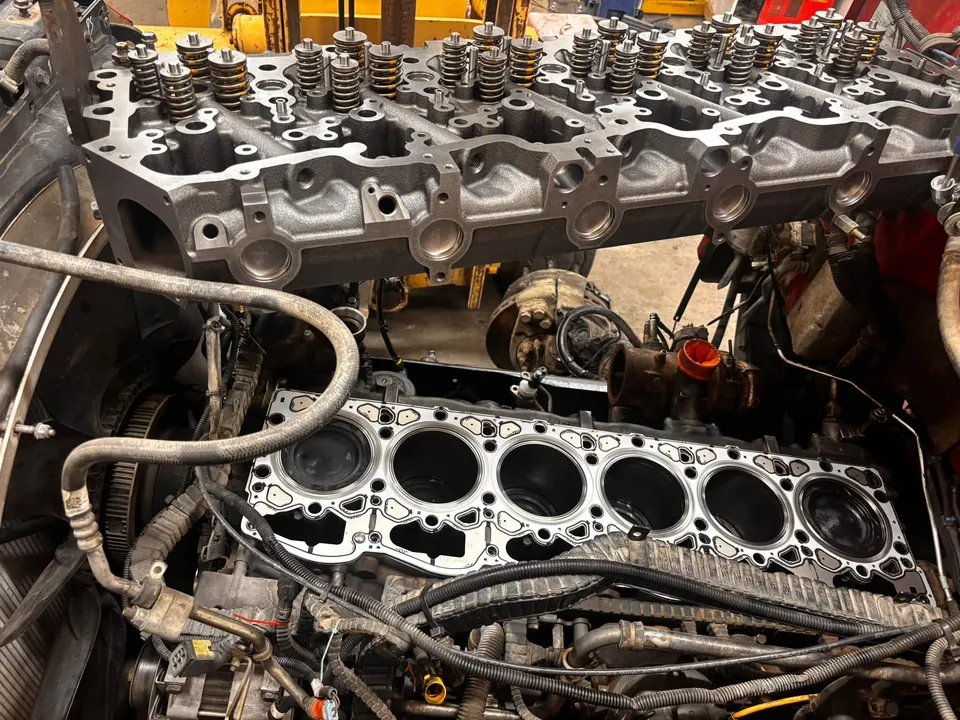
On every PM-covered unit: PMs, DOT inspections, DVIR and roadside repairs, diagnostics, in-shop repairs, and engine rebuilds.
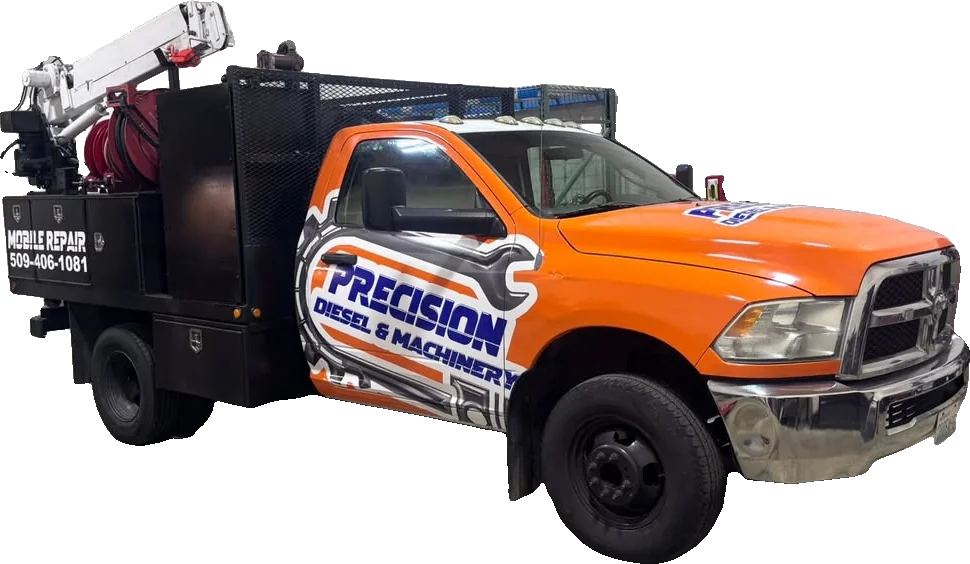
24/7 MOBILE REPAIR
Yard, jobsite, or roadside. 2 fully equipped service trucks available, with a 3,200 lb crane. Emergency call-out fee applies.
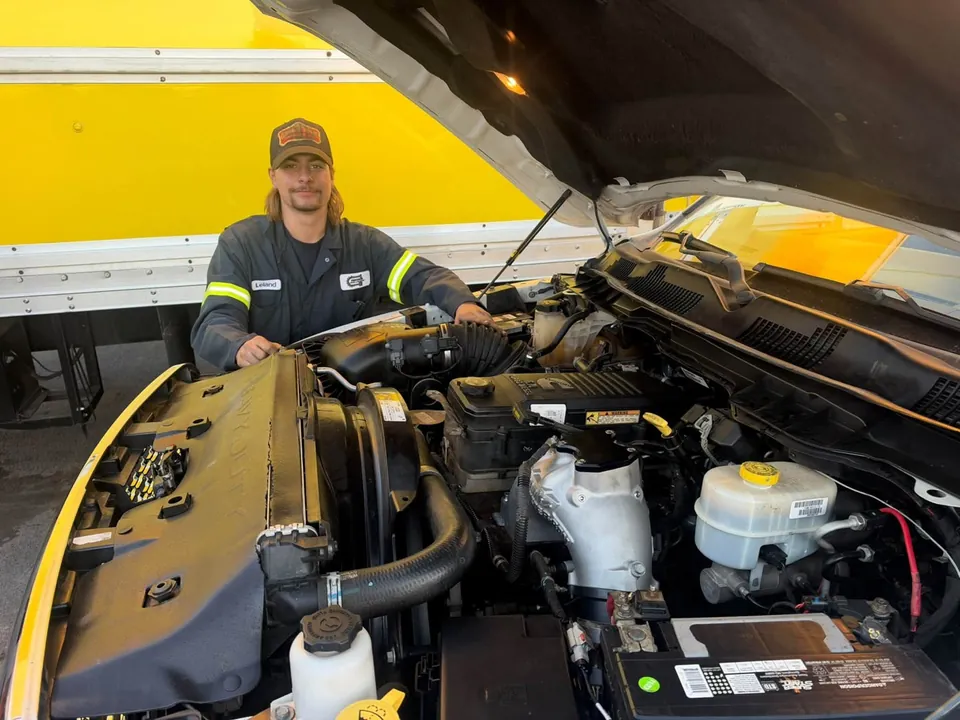
PRIORITY RESPONSE
Same-day service for calls before 5 pm. Your call goes to the next available technician not already on a priority call.
ALSO INCLUDED ON EVERY COVERED TRUCK AND TRAILER
ADDITIONAL TERMS
- Month-to-month; cancel with 30 days' written notice (§13)
- Add or remove units anytime by written agreement (§12)
- No work beyond scheduled PM without your approval (§12)
- Trucks and trailers onboarded at our first visit (§12)
- Mobile PM within 10 miles of our shop, no extra charge (§9)
- Standard mobile call-out fees beyond 10 miles (§9)
- Net 15 payment terms (§13)
- We act as your maintenance agent; you remain the carrier (§2)
Section numbers refer to the agreement you review in the enrollment form below.
ENROLL ONLINE · 3 STEPS
GET YOUR TRUCKS DOT-READY.
Complete the form below and sign by typing your name. (about 10 minutes)
VINs, records, due dates.
We handle the rest.
Have these handy
- Company legal name, USDOT number (if you have one), and WA UBI
- Who signs for the company and who signs roadside corrections
- A list of trucks and trailers. Unit #, year/make/model, VIN, and GVWR help, but you can finish the list at the first visit.
- Your billing email and whether you need a PO number on invoices
Questions first? Call or text (509) 406-1081 · Shop hours Mon–Fri 8:00 AM–5:00 PM PT · 24/7 emergency dispatch
5.0 Star Rating on Google (34 reviews and counting)
STEP 1 OF 7 · ABOUT 2 MIN
Your company
Don't have one yet? Leave it blank.
9 digits, on your WA business license.
Your answers save automatically in this browser only. Questions? (509) 406-1081.
LOOK IT UP YOURSELF
https://www.ecfr.gov/current/title-49/part-396 (opens in a new tab)
49 CFR Part 396: Inspection, Repair & Maintenance
https://wsp.wa.gov/driver/commercial-vehicle-driver/ (opens in a new tab)
Inspections, compliance reviews, laws, contacts
More official sources (10)
- eCFR: 49 CFR §390.5: What counts as a CMV (opens in a new tab)
- FMCSA: Guidance: truck and trailer each under 10,001 lbs (opens in a new tab)
- Washington Legislature: RCW 46.32.005: Washington CMV definition (opens in a new tab)
- Washington Legislature: WAC 446-65-010: Washington adopts the federal rules (opens in a new tab)
- eCFR: 49 CFR §385.321: New-carrier audit auto-fail list (opens in a new tab)
- FMCSA: New Entrant Safety Assurance Program (opens in a new tab)
- eCFR: 49 CFR Part 386 App. B: Federal penalty amounts (opens in a new tab)
- Washington Legislature: RCW 46.32.100: Washington penalties (opens in a new tab)
- WA UTC: Who needs a USDOT number in Washington (opens in a new tab)
- FMCSA: SAFER company snapshot: look up your USDOT record (opens in a new tab)
Links open in a new tab. Your enrollment stays right here.
QUESTIONS
FREQUENTLY ASKED
I only work in Washington. Do the DOT maintenance rules still apply?
Yes, if the truck or truck-plus-trailer is a CMV (used for business, rated 10,001 lbs or more). Washington adopts the federal Part 396 maintenance rules in their entirety for intrastate and interstate carriers. The intrastate differences are driver rules, not maintenance.
My pickup is under 10,001 lbs. Am I covered by the rules?
Count the trailer. GCWR is the truck's GVWR plus the trailer's GVWR (or the manufacturer's combination rating, whichever is greater). An 8,800 lb pickup towing a 7,000 lb equipment trailer is a 15,800 lb combination, and both are CMVs while hitched. Try the calculator above.
Does every trailer need its own annual inspection?
Yes. Each vehicle in a combination must be inspected at least every 12 months and carry its own report or decal. A trailer rated 10,001 lbs or more is a CMV on its own no matter what pulls it.
If we're audited, who is responsible: us or Precision Diesel?
You remain the motor carrier and stay legally responsible. FMCSA lets a qualified garage do the inspection, repair, maintenance, and repair certifications as your agent, so the work and the paperwork come off your desk and the records are ready when an auditor asks. Your drivers still complete DVIRs and review them before driving.
What does the 10% discount cover?
Every service on a PM-covered unit: PMs, DOT inspections, DVIR and roadside repairs, diagnostics, in-shop repairs, and engine rebuilds, for as long as the unit is covered.
What does Priority Response actually mean? Is there a guaranteed time?
Your call goes to the next available technician not already on a priority call, and calls before 5 pm get same-day service. It is a routing commitment, not a guaranteed arrival time; timing depends on technician availability, distance, weather, and parts.
Is 24/7 mobile repair included?
Covered units get 24/7 emergency mobile repair: yard, jobsite, or roadside. An emergency call-out fee applies to emergency and after-hours calls. Scheduled mobile PM within 10 miles of our shop is at no extra charge; standard mobile call-out fees apply beyond 10 miles.
How do DVIR repairs get certified?
Call or text (509) 406-1081 with a photo of the DVIR sheet. We repair the defect at the shop or in the field, and the technician signs a printed DVIR Repair Certification as your agent, attaches it to the DVIR, and scans both into your Fullbay file. Your driver reviews and signs the DVIR before the next trip.
Where are my records, and can I see them?
Every covered unit has a Fullbay file by VIN with the PM schedule, annual inspection reports, DVIRs and certifications, roadside corrections, repair orders, parts, and photos. You and your drivers can log in to the client portal any time, and we can produce a compliance packet for any unit on request.
What happens to my records if I cancel?
The records belong to you. We deliver an electronic export of each covered unit's records after the agreement ends.
Is there a contract term or cancellation fee?
No. It's month-to-month. Either side can end it with 30 days' written notice (email works), with no early termination penalty. Invoices are Net 15.
What does it cost?
PM pricing is set in a service schedule for your units. You'll see it before your first scheduled service, along with the mobile and emergency call-out rate schedule. Every service on a covered unit is 10% off.
Do I have to list every truck and trailer right now?
List what you can. At least tell us how many trucks and trailers you have. VINs, ratings, and records are confirmed and completed at our first visit, and you can add or remove units any time by written agreement.
We don't have a USDOT number yet. Can we still enroll?
Yes. Leave it blank and we'll note it. Washington requires every motor carrier with a CMV operating in the state to have a USDOT number, so plan to get one.
Who should sign the agreement?
An owner, officer, or manager with authority to sign contracts for the company. You'll also name a company official to sign roadside-inspection certifications; it can be the same person.
Is signing online legally binding?
Yes. The federal E-SIGN Act and Washington's Uniform Electronic Transactions Act (chapter 1.80 RCW) give electronic signatures the same effect as ink. You'll receive the signed PDF by email and can request a paper copy any time at no charge.
We have one truck. Do we need DVIRs?
A motor carrier operating only one CMV is exempt from the DVIR requirement in §396.11. The annual inspection, maintenance, and recordkeeping rules still apply, and we still respond to and document any defect your driver reports.
READY WHEN YOU ARE.
Month-to-month. 10% off every service on covered units. Your DOT file kept for you, by VIN.
Prefer to talk first? Request a fleet consultation